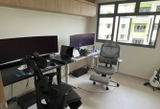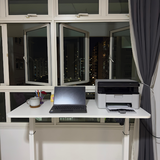
At some point in the last few years, someone looked at a standing desk and a walking pad and thought: what if we combined these? The idea spread quickly, as good ideas tend to, and now the standing desk and treadmill pairing has become iconic. The pitch is compelling enough: work from your desk, burn calories, stay active, and feel great doing it. But how much of that is actually true, and how much of it is social media doing what social media does?
The honest answer is somewhere in the middle. The setup has genuine merit. It also has real limitations that most enthusiastic reviews tend to gloss over. Here is what you actually need to know.
What the Setup Actually Is
The standing desk and treadmill office setup requires two things: a compact, low-profile treadmill, also known as a walking pad, and a motorised standing desk, set at a height suited for walking. The desk handles the ergonomics; the walking pad handles the movement. Together, they create a workspace where you can walk slowly while you work, rather than sit or stand still.
The walking speeds involved are important to understand from the start. This is not exercise in any conventional sense. Most people who use these setups walk at somewhere between 1 and 3 kilometres per hour, a pace at which you can type, read, and take calls without losing your footing or your focus. It is closer to a slow amble than a workout, which is precisely the point.
What the Research Actually Says
Studies on walking while working show a consistent pattern. A 2015 peer-reviewed study published in PLOS One found that participants walking at 1.5 mph showed a modest 9% drop in cognitive processing speed, attention, and working memory compared to those sitting at a standard desk.
At low speeds, that drop is generally considered an acceptable trade-off for the physical activity gains of walking more. Where the decline becomes more pronounced is in tasks requiring fine motor precision, such as detailed typing, mouse-intensive work, or complex calculation, where performance tends to dip more noticeably.
The practical implication is that a standing desk and treadmill setup works well for parts of the working day rather than all of it. Administrative tasks, email, calls, video meetings, and light reading are all reasonable candidates for walking mode. Deep focus work, anything requiring precision or sustained concentration, is generally better handled sitting or standing still.
However, this isn't a deal-breaker for the setup. It's just a reality check on the premise that you can simply walk your way through an entire productive workday without compromise.
The Benefits That Are Real
What the setup does deliver, consistently, is a meaningful reduction in the amount of time spent completely sedentary. Swapping two or three hours of still sitting for gentle walking each day adds up considerably over weeks and months, both in cumulative calorie burn and in the broader health benefits associated with reducing stationary time.
The psychological effect is also worth noting. Many people who use these setups report better energy levels and mood across the day, particularly in the post-lunch period when productivity tends to dip. Whether this is the movement itself, the novelty of the setup, or simply the placebo effect of doing something active is hard to disentangle. But the effect is commonly reported and genuinely useful regardless of its precise cause.
The Desk You Choose Matters More Than You Might Think
 |
| ASTERIA |
Not every standing desk is equally suited to a walking pad setup, and this is where the setup can fall apart if you get the desk wrong.
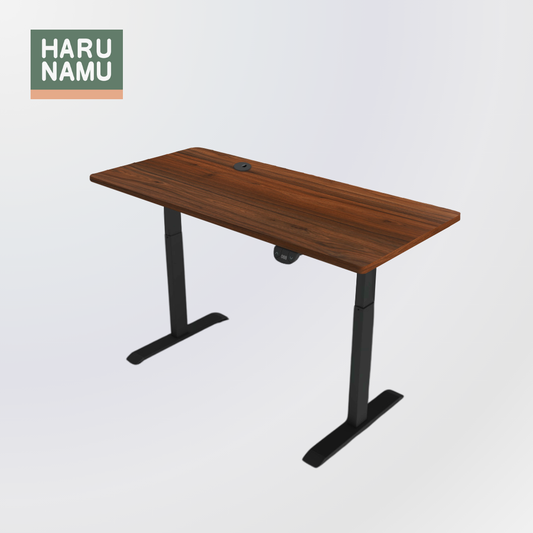
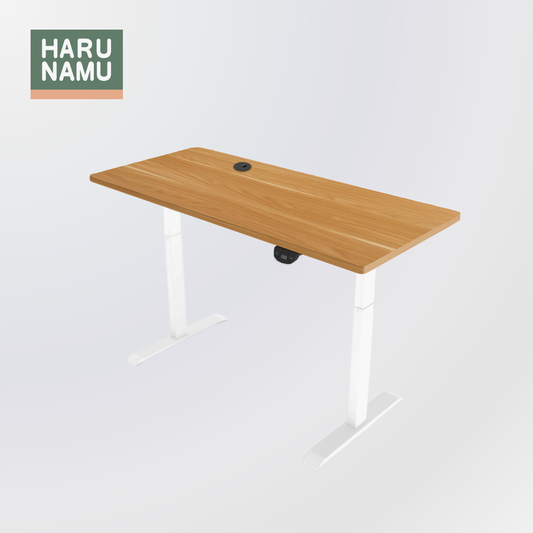
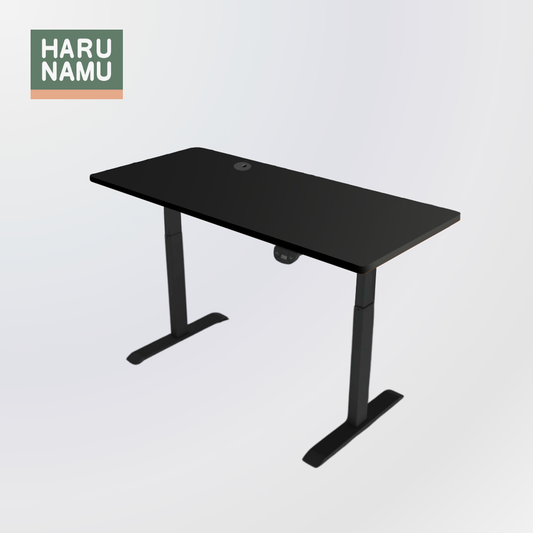
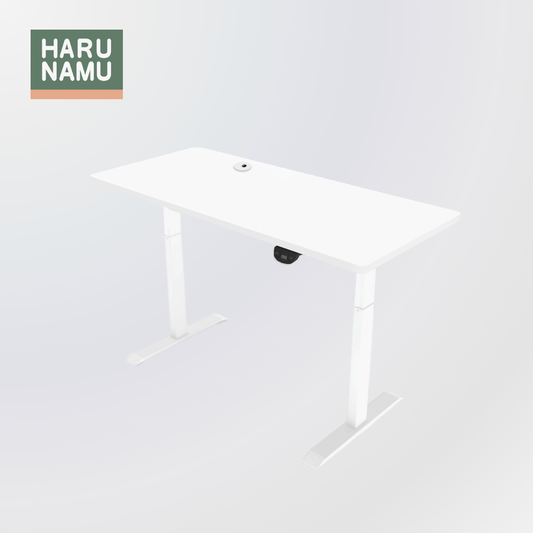
Height range is the first consideration. When walking, most people need the desk slightly higher than their standard standing height to account for the slight drop in posture that comes with movement. A desk with a generous height ceiling gives you more flexibility to find the right position. The ASTERIA covers a range of 63.5 to 128 cm, one of the widest available, which means it can accommodate sitting, standing, and walking heights comfortably within a single desk.
Its four memory presets make this even more practical. You can save your sitting height, standing height, and walking height separately, and switch between them with a single button press rather than readjusting every time you step on or off the pad.
The BRISKA adjusts between 72 and 117 cm, which works well for most users within a standard height range. It is a reliable starting point if you want to try the setup without committing to the full ASTERIA investment, particularly if you are on the shorter end of the height range.
Surface stability also matters. A desk that wobbles at its upper height range will amplify any vibration from the walking pad beneath it, which is uncomfortable and potentially damaging to equipment over time. Both the BRISKA and ASTERIA are built with steel frames specifically designed for stability across their full height range.
The Considerations
Beyond the cognitive performance point already covered, a few practical considerations come up consistently among people with a walking pad and standing desk setup.
The walking pad itself takes up floor space. In a smaller home office or HDB study room, this is a real consideration, particularly as walking pads need clearance both behind and in front of the desk. Some are foldable, which helps, but the setup is not invisible.
It also takes some adjustment time. The first week of walking while working tends to involve more coordination overhead than most people expect. Typing accuracy drops initially, your awareness of the walking mechanism competes with your focus on the screen, and finding the right speed and desk height for your specific body takes some experimentation.
Most people settle into a comfortable rhythm after a week or two.
So, Is a Standing Desk and Threadmill Setup Worth It?
For people who spend most of their day at a desk, find it hard to build regular movement into their routine, and work on tasks that don't all require intense concentration, yes, the setup has real value. It is one of the more genuinely effective ways to add low-level activity to a sedentary working day without disrupting the day itself.
At the end of the day, the fact remains that incorporating as much movement as you can throughout the day has meaningful benefits whether you choose to pair a treadmill with your standing desk or not.
Studies show that using a standing desk alone, with no change to exercise, step count, or diet, lowers fasting triglycerides (fat found in the blood) by as much as 17% and also improves how effectively the body regulates blood sugar.
That being said, there’s no replacement for regular exercise outside working hours, and is ultimately the key to maintaining long-term health and wellbeing.
For people whose work is primarily cognitively demanding and precision-dependent, the benefits are more limited. An adjustable standing desk that enables regular sit-stand transitions throughout the day, depending on usage, may deliver comparable health benefits with less friction and no additional floor space required.
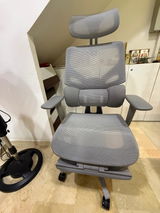
The best version of this setup starts with the right desk. Explore Harunamu's standing desk range to find the one that gives you the height range and transition speed the setup actually needs, and pair it with a reliable office chair for the parts of the day when walking isn't the right mode.
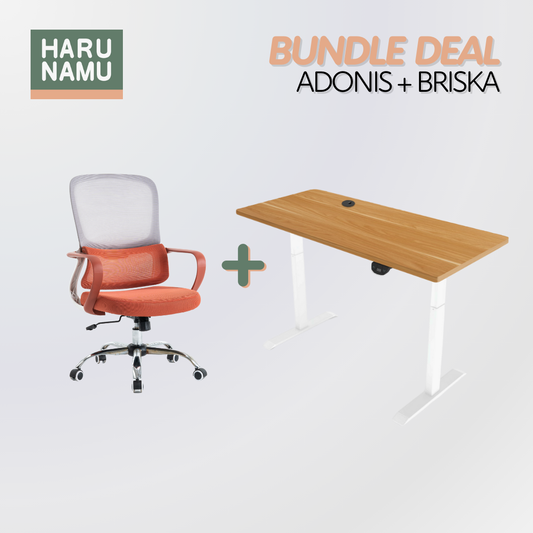
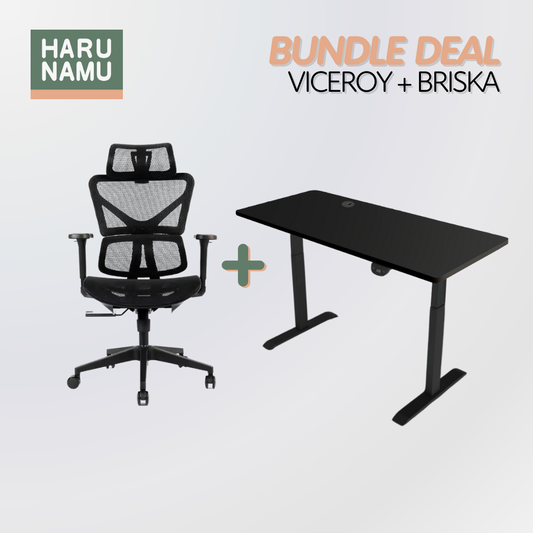
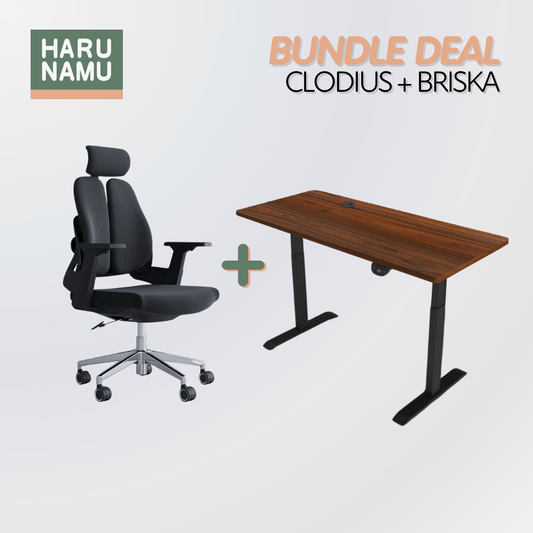
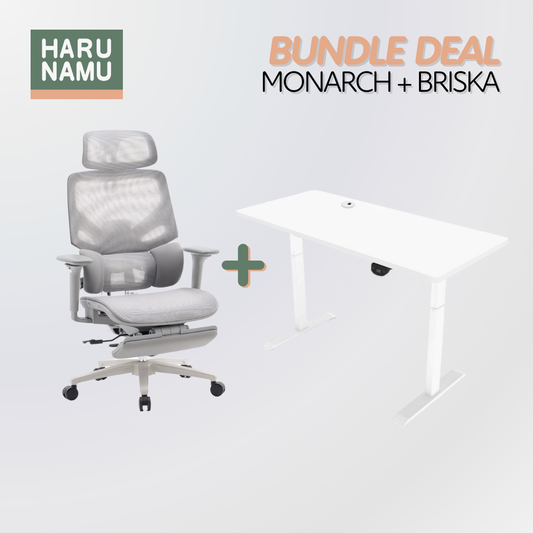
If you'd like the complete workstation in one go, Harunamu's standing desk bundles pair a desk with an ergonomic chair at a combined price that makes the full setup more accessible.

Frequently Asked Questions
What is a standing desk and treadmill setup?
It is a home office configuration that pairs a motorised standing desk with a compact walking pad or low-profile treadmill placed underneath. The desk adjusts to a comfortable walking height, allowing you to walk slowly while you work rather than sit or stand still. It is not a dedicated treadmill desk unit, but rather two separate pieces used together.
What speed should you walk at when using a standing desk and treadmill?
Most people find a walking speed of 1 to 2.5 kilometres per hour works well for desk-based tasks. At this pace, you can type, read, and attend calls without significant coordination issues. Faster speeds tend to interfere with typing accuracy and concentration, particularly for tasks requiring precision or sustained focus.
Can you do all your work while walking on a treadmill?
Not ideally. Research suggests that walking while working suits routine or lower-demand tasks well, such as reading, email, and calls. For work requiring precise typing, complex problem-solving, or sustained concentration, most people find that performance dips noticeably when walking. The setup works best as one mode among several throughout the day, rather than a full replacement for sitting or standing still.
Does a standing desk and treadmill setup actually help with health?
Yes, though the benefits are cumulative rather than dramatic in the short term. Replacing several hours of still sitting per day with gentle walking reduces sedentary time, adds to daily calorie burn, and is associated with improved energy and mood across the working day. The health benefits come from consistency over weeks and months rather than from individual sessions.
What should I look for in a standing desk for a walking pad setup?
Height range is the most important factor. Walking typically requires a slightly higher desk position than standing, so a desk with a generous upper height limit gives you more flexibility. Memory presets are also valuable since they allow you to save separate heights for sitting, standing, and walking and switch between them instantly. A stable steel frame is essential, as any wobble at standing height tends to be amplified by the movement of the walking pad beneath.
Is a standing desk with memory presets better for a treadmill setup?
Yes, noticeably so. Being able to save your walking height as a preset and recall it instantly makes transitioning between sitting, standing, and walking far more practical. Without presets, you need to readjust the desk height manually each time you step on or off the pad, which adds enough friction to discourage frequent switching. The ASTERIA's four memory presets are particularly useful for this reason.