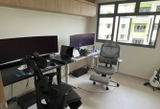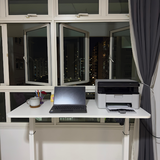
In Singapore, the way we work has evolved, quietly, steadily, and often within the spaces we already inhabit. Laptops move fluidly between office towers and home study corners. Dining tables double as workstations, spare rooms become dedicated offices, and the boundary between professional and personal space grows more flexible by the year. In this context, standing at a desk has emerged not as a thoughtful response to modern work—one that supports movement, focus, and long-term wellbeing without demanding dramatic lifestyle change.
At Harunamu, we’ve spent years furnishing modern homes and offices across Singapore. What we’ve learned is simple: standing desks only work when they are approached as part of a system—one that respects space constraints, climate, work rhythms, and the realities of daily use. This guide is written from that perspective. Not as a manifesto, but as a grounded, Singapore-first approach to standing at a desk—what works, what doesn’t, and how to do it well.
Why Standing Matters—But Only When Done Right
The case against prolonged sitting is well established. Research cited by Harvard Medical School has shown clear associations between excessive sitting and increased risks of cardiovascular disease, metabolic issues, and premature mortality. Even regular exercise, they note, cannot fully offset eight or more uninterrupted hours of sitting.
Yet standing all day is not the answer.
In Singapore’s warm, humid climate, prolonged standing often leads to leg fatigue, lower-back strain, and foot discomfort. Many people abandon their standing desks within months—not because the desk failed, but because the habit was unsustainable.
The goal is not to stand constantly. The goal is movement through alternation.
How Singapore Professionals Actually Use Standing Desks Successfully
From our experience working with home offices, shared family spaces, and small private offices across the island, sustainable standing follows a few consistent principles:
Short Standing Intervals Support Consistency
In practice, most professionals in Singapore find that standing works best in short, intentional intervals. Standing for 20 to 40 minutes at a time—several times throughout the day—keeps the body engaged without introducing fatigue. This rhythm integrates easily between tasks, allowing standing to become habitual rather than disruptive.
Standing Is Best Paired with Low-Intensity Tasks
Standing naturally complements lighter cognitive work. Reviewing documents, attending virtual meetings, or organising ideas are moments where standing enhances alertness without compromising precision. For tasks that demand fine motor control or sustained concentration, remaining seated often remains the more comfortable choice.
Quiet Desk Mechanisms Matter in Shared Spaces
In Singapore homes, where workspaces are frequently shared and sound travels easily, noise becomes a practical consideration. A smooth, quiet lift mechanism allows users to change positions early in the morning or late at night without disturbing others—an often-overlooked factor in long-term desk satisfaction.
Consistency Outperforms Novelty Over Time
Standing desks succeed when they reduce friction. Desks that transition smoothly, hold their position securely, and—where applicable—remember preferred heights are used more consistently. Over time, this ease of use matters far more than maximum height range or adjustment speed.
Choosing the Right Standing Desk for Singapore Homes
When space is limited and workspaces are shared, flexibility becomes essential.
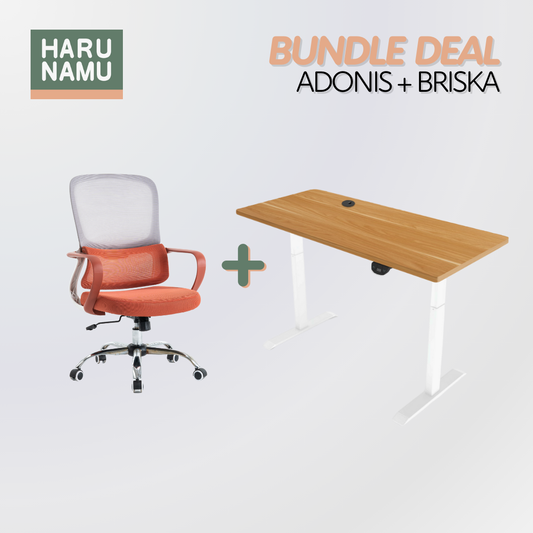
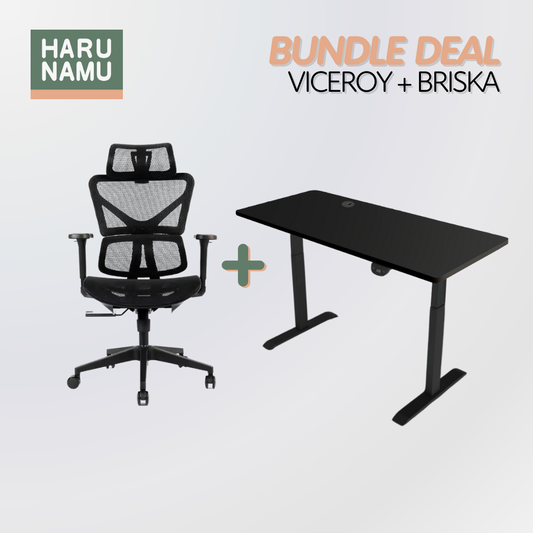
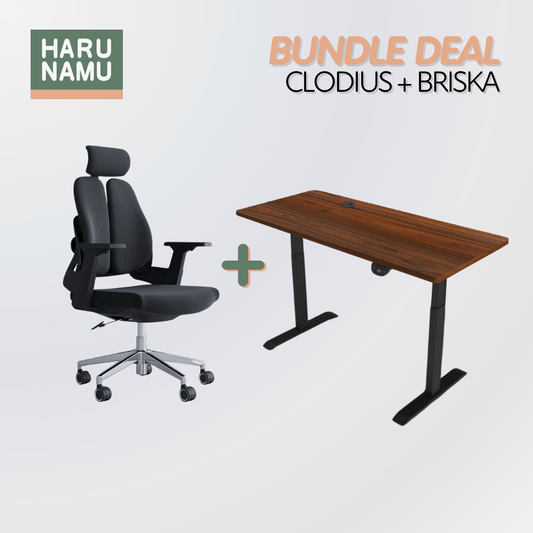
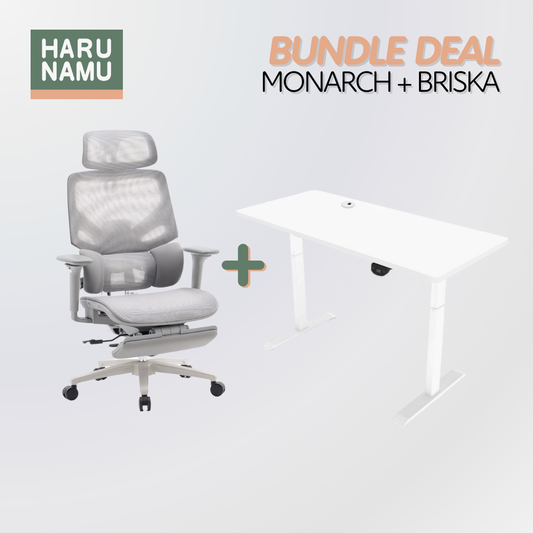
At Harunamu, our standing desk range centres around two main variants: BRISKA and ASTERIA. Both are designed to adapt to Singapore homes, with compact footprints, stable lifting mechanisms, and understated design that blends into living spaces rather than dominating them.
BRISKA: Practical, Stable, Straightforward
 |
| BRISKA |
The BRISKA series is built for users who want reliability without unnecessary complexity. Height adjustment is smooth and stable, making it suitable for daily alternation between sitting and standing.
Available finishes include:
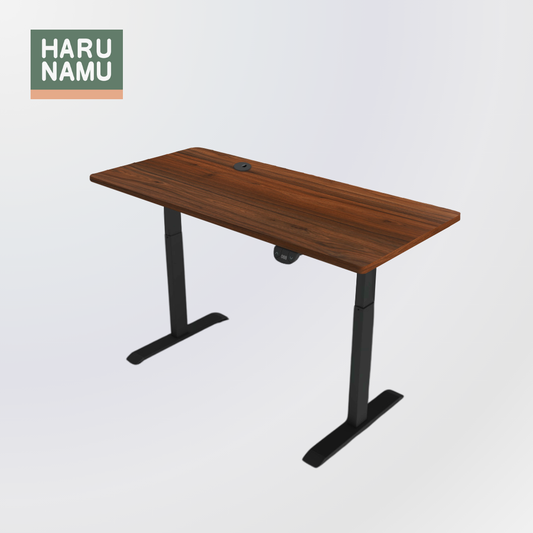
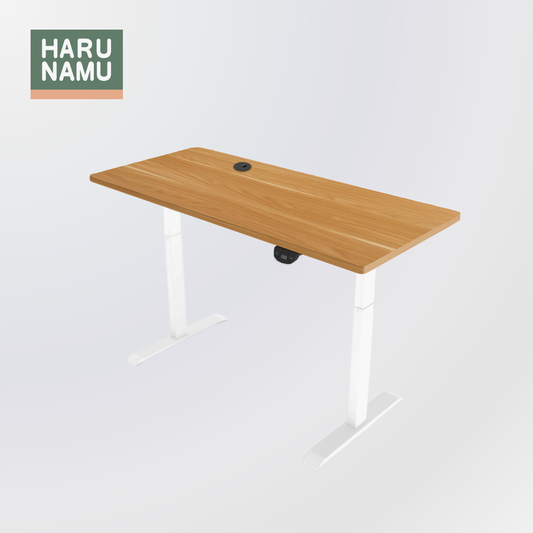
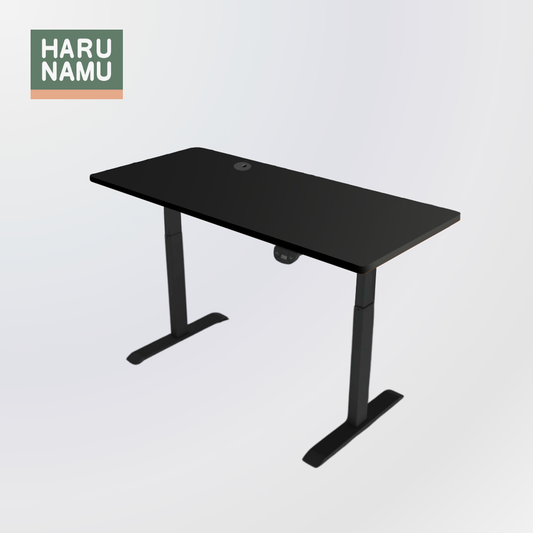
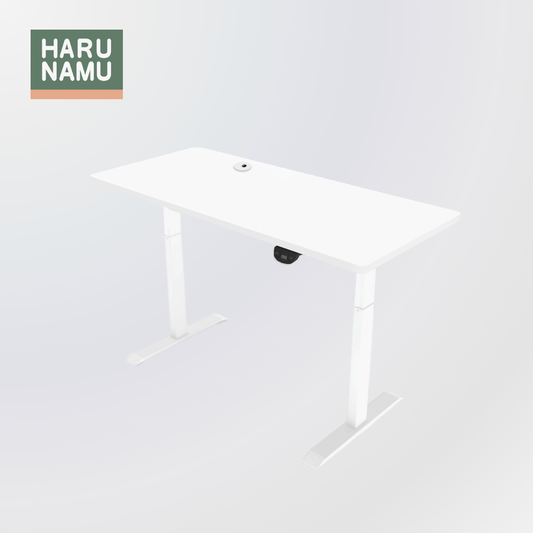
These neutral surfaces integrate easily into modern interiors, home offices, and shared family spaces. While the tabletop colour defines the visual tone, each BRISKA desk can be paired with either black or white legs, allowing you to align the desk with your existing furniture rather than redesign the room around it.
When Wood Matters: Warmth in a Digital Space
For some workspaces, especially home offices that double as personal sanctuaries, material presence matters. The BRISKA Maple Wood Standing Desk introduces a lighter, softer tone that works particularly well in compact rooms. Maple reflects light gently, helping smaller spaces feel more open without visual clutter.
The BRISKA Walnut Wood Standing Desk carries more visual weight. Its deeper tone grounds the space, offering a sense of permanence and calm—qualities many professionals seek when work extends into evenings. These finishes are not about decoration. They are about creating a surface that feels settled, familiar, and conducive to long hours of thoughtful work.
ASTERIA: Precision for Shared and Hybrid Workspaces
 |
| ASTERIA |
For households where a desk is shared, or for professionals who switch positions frequently throughout the day, ASTERIA introduces memory-based height adjustment.
With programmable presets, ASTERIA removes friction. One touch returns the desk to your preferred seated or standing height—no recalibration, no guesswork.
Available options include:
- ASTERIA Walnut Wood Standing Desk with Memory
- ASTERIA Maple Wood Standing Desk with Memory
- ASTERIA Black Standing Desk with Memory
- ASTERIA White Standing Desk with Memory
In Singapore homes where workspaces are often shared between partners or family members, memory presets are not a luxury—they are what make standing desks practical long-term.
Standing at a Desk Is a Practice, Not a Purchase
Standing desks do not transform workdays overnight. What they offer is optionality—the freedom to change posture, re-engage the body, and reduce the toll of prolonged sitting.
In Singapore’s fast-paced, space-conscious environment, success comes from choosing furniture that adapts quietly and consistently to your life, rather than demanding behavioural perfection.
That is the philosophy behind how we design and curate at Harunamu.
Frequently Asked Questions
How long should I stand at my desk each day?
Most users benefit from standing 1.5 to 3 hours spread throughout the day, broken into short intervals rather than one continuous block.
Is standing all day bad for you?
Yes. Prolonged standing can cause leg fatigue and circulatory issues. Alternation between sitting and standing is key.
What’s the difference between BRISKA and ASTERIA?
BRISKA offers straightforward electric adjustment, while ASTERIA includes memory presets for quick, repeatable height changes.
Are standing desks suitable for small HDB rooms?
Yes. Both BRISKA and ASTERIA are designed with compact footprints suitable for Singapore homes.
Do I need a special chair if I use a standing desk?
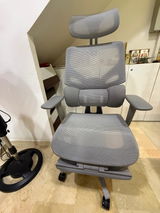
A supportive chair is essential, as standing desks work best when paired with proper seated ergonomics.